MIGALOO THE WHITE WHALE
Migaloo, said to be between 13-15 meters long, (42-49 feet) Famous Albino Whale of the South Pacific is once again in danger and Australia, one of the worlds most popular vacation spots, famous for the Great Barrier Reef , and best of all, avid whale watchers, are rightfully upset when whalers venture near Australian waters.
Japan, who stake claims to legally kill whales, supposedly are using a loophole in the International Whaling Commission (IWC) laws to hunt over 1,000 whales each year in the southern hemisphere, allegedly for scientific research, and they will target humpbacks for the first time. Heading to Antartica, the Tokyo whalers have been given a quota of 50 humpbacks whales, along with 50 fin whales and 900 minke whales this year, (pregnant females included), minkes are the usual preference of the Japanese whalers.
The whales who live in the Antarctica, migrate through the channel into the Great Barrier Reef to mate and bear their young. The Aussies enjoy watching the mother whales and their calfs frolic in the waters, from a distance as close as standing on the beach, or while sitting on their deck at a barbie, or even a view from the docks, and of course their yachts. Their boats will gather round a pod and watch the whales as they make their way along the Australian coast, the Aussies aren't the only ones having fun, the whales dont seem to mind the attention, as they show off for the tourists, sometimes for hours as they frockic in the harbours.
The Australians respect these majestic creatures, they do all they can to preserve nature in all its form, including the Great Barrier Reef itself, the migration of the sea turtles, and every year, thousands of people line against the coastal lines, keeping an eye out on the horizon for the one they call Migaloo.
Migaloo is actually an indigenous name, its an Aboriginal word meaning, white fella, and every year, the media will report on Migaloo, and they let everyone know when Migaloo is swimming by their town. He's been called the Moby Dick of the seas, the Great White Whale. And every year, the Aussies fear, will this year be the year that the Japanese kill their favorite whale. With Migaloo accustomed to human attention on yachts and sail boats, it makes Migaloo an easy target for the Japanese.Japan hasn't ruled out the hunting of the Great White Whale, and abruptly said "No Comment" in a press conference when asked if the whalers intended to hunt the white humpback Migaloo, in their list of humpback whales.
For the record, Migaloo, as any Aussie will tell you, is the most angelic of all sea creatures. When she is present in the water, she actually emits a glow that lightens the water around her by her snow white features, and when she breaks the surface of the water, and emerges into the brightly lit sunfilled Australian skies, all in eyesight, stand in awe, stand at attention, and their breath is caught, by her remarkable beauty.
The Sea Shepard Conservation Society took matters in their own hands last year, and decided to protect the helpless whales from whalers, and threatened to ram into the Tokyo fishing vessel with their ship, which had a bulldozer sized harpoon. This year the Tokyo Whalers are calling the Conservationists environmental terrorists, and they asked New Zealand and Australia to protect their whalers, to which the conservationists were appalled, saying Its the WHALES who need the PROTECTING!!
The Captain of the Sea Shepherd, (The Conservationists Ship), Paul Watson stands firm in his position, as far as he's concerned, the Tokyo Whalers are in violation of the anti-whaling laws in Australian waters and he's confident the law is on his side. The Japanese have doubled their security and are prepared to defend themselves against the anti-whalers, who have no intentions on backing down.
The Japanese have widely been accused of using a loophole to hunt whales in international waters, claiming they are hunting whales for research, and yet Japan kills over 1000 whales in the South Pacific Region each year in the name of said research. Thats not including the whaling going on in the Atlantic side. What gets the Conservationists blood boiling, are the lack of results produced for such an abundance of research? One whale alone is a massive amount of a creature, what type of research would require the use of over 1000 whales per year? The accusations stem from such grounds, and many endangered animal protecting agencies will tell you, Japan is using the loophole called research, as excuse to perform commercial fishing in international waters. That's the opinion of the conservationists, not the one writing this article, before you post your comment below. (For the record, Japan isn't the only country who hunts whales, and other creatures such as sea horses, and unique reef fish are also targeted.)
Australians do an incredible amount of research themselves, and have had many remarkable advances in medical research, including vaccines for specific types of cancer, some of which have hit the market, and some of which will be released within one to two years from now, plus, they also do research on whales. The Australian Conservationists will proudly tell you, that not one single spot on a whales head would be harmed during any research done by an Australian on a whale, infact, they do research on the creatures from afar, and its proven affective, lets explore that just a little.
Whales are the biggest creatures in the sea, but remarkably, they truly have no method in protecting themselves. Its not like they have razor teeth and burly strong jaws like a shark, or a killer whale (Killer whales are actually members of the dolphin family, and are not whales, and killer whales are actually a whale's worst predator).
Whales are gentle creatures, and have come to be more understood by the Australians as the migration process along their coastline has enabled Australians to study the whales, to the point that last month the Aussies made a break through in decoding whale communications with each other. The Aussies discovered that all the beautiful sounds, after recording thousands of songs, up to 4000 recordings, and studying pod after pod of whale families, that the whales are indeed, families. They argue, they play, they complain, the kids whine, the parents reprimand. It's like an annoying family road trip, with the kids saying, are we there yet?, and most importantly the whales care for each other. The Australians take the welfare of their whales very seriously. They are avid whale watchers, and can't comprehend why anyone would want kill off a species that is so gentle and majestic.
I only wonder if the Australians could put Migaloo on the endangered species list, as the only one of its kind, the only recorded White Humpback Whale. I wonder, if that in itself, would prevent any country from putting Migaloo on the hunting list.

July 19, 2008
SCUBA SKILLS
Muddy Waters: Techniques for Low-Vis Diving

By: I´M A DIVER
NETWORK GROUP

That happened to me in the Galapagos Islands. Beautiful day, clear water and suddenly we encountered a wall of green. Instantly visibility decreased from 60 feet (18 m) to less than 3 feet (1 m). It even happens in Hawaii. On days when it rains heavily in the mountains you often get a brown-water line where mountain streams empty into the Pacific. Longshore currents whisk the muddy water down the coast, quickly overwhelming a number of popular dive sites. On rare occasions divers might be greeted by 100-foot (32-m) visibility when entering the water and before the dive is over be literally feeling their way back to the boat.
Many divers, especially those accustomed to clear water, become uncomfortable when faced with limited-visibility conditions. Even if you know that visibility is going to be less than optimum and have dived in those conditions before, it is easy to lose your way. So what do you do if you encounter turbid water conditions and become disoriented?
The first rule of any stressful diving situation is to remain calm — stop, think and act. Unless you are in immediate danger, cease all activity and try to relax — take controlled deep breaths and force yourself to exhale slowly and fully. Repeat this until the initial wave of anxiety passes.
Once under control, consider your options. Unless you have completed a limited-visibility diving specialty course, you may not know how to react to being disoriented in turbid water, but you have to do something.
Begin by checking your gauges — air supply, depth and bottom time. If you run low on air or are near your planned bottom time limit, surfacing may be the safest solution. However, in severely turbid water sometimes you may momentarily have difficulty discerning up from down.
The one sure way of telling is by observing a tiny amount of water inside your mask — it will always pool on the downside. So if water is accumulating anywhere other than in the bottom skirt of the mask, you are not right-side up. It may be necessary to let a little water into your mask to perform this test.
In most disorientation situations, a diver can tell up from down by observing the direction of his exhaled bubbles (photo 1). Bubbles will always float upward, except in rare cases when the diver is experiencing a downwelling current. I have observed this only twice, once at Costa Rica’s Cocos Island and again at Blue Corner in Palau. Downwellings are not uncommon at these venues but are rare most everywhere else. These situations do, however, confirm that watching your bubbles is not a completely fail-safe way to determine up from down.
When disoriented in turbid water, swim into the current to avoid being swept away from the area you are diving. Observe your exhaled bubbles to verify the direction of the current. The bubbles in photo 2 are drifting backward as they rise; these divers are swimming into the current as they should.
Swimming into the current helps you avoid ending up downcurrent from the exit site or far away from the boat. Going beyond the site while swimming into the current is not a concern; you can always drift back after surfacing.
In good visibility many divers do not navigate by compass except when finding a site such as a wreck for which they have compass bearings. Since the water is clear, natural navigation techniques usually work well. However, before descending I always take a just-in-case compass reading toward shore. That way, I’ll never get caught swimming aimlessly in the wrong direction if I become disoriented or lose my way. By following the compass heading eventually I will end up on shore.
Another good habit to form, even in good visibility, is checking the depth beneath the boat. Upon reaching the bottom when descending, take a quick glance at your depth gauge. And as you swim away take a compass heading for the anchor location. If turbid water moves in and you become disoriented, you’ll have two references.
In turbid water your gauges — depth, compass, timing device and pressure gauge — are your eyes. When you descend into turbid water or anticipate the possibility of worsening visibility, plan to follow a compass course throughout the dive (photo 3). Combine depth, time and direction to navigate the site and safely find your way back.
Due to the absence of references, a constant depth is challenging to maintain in turbid water. The best solution is keeping a close eye on your depth gauge. The divers in photo 4 are slowly ascending, constantly checking their depth gauges so they don’t exceed the safe ascent rate.
The buddy system also takes on renewed importance in turbid water. To avoid becoming separated, most buddies stay especially close when they can’t see beyond arm’s length. In zero visibility it is a good idea to maintain physical contact or use a short lead line — each buddy holding an end — to stay together.
If you become separated from your buddy listen intently for his bubbles and do a couple of slow 360-degree rotations while looking for your buddy’s bubbles and light beam before completing the standard lost buddy routine.
Divers who become disoriented in turbid water sometimes forget or intentionally omit the safety stop while ascending. Even when you are anxious about getting to the surface, it is still important to make a complete safety stop. Keep a hand on your buoyancy compensator’s inflation/deflation control and pay special attention to your depth gauge. Unless you are running low on air, complete the stop, followed by a slow, in-control ascent for the final 15 feet (5 m) just as you would in clear water.
Any diver, regardless of experience level, can become a victim of disorientation in turbid water. Remembering to remain calm, using your gauges — depth, time, compass and air — and not deviating from safe diving practices will eliminate the anxiety often caused by poor visibility.
By: I´M A DIVER
NETWORK GROUP
July 11, 2008
SHARK CAMPAIGN
Moving forward in 2008

We were delighted to have raised £23,000 towards GCT's shark campaign in 2007. This year we want to raise much more money, as we are now including many more species in the campaign!
2008 marks the 10th anniversary of the creation of the GMR and we have broadened our campaign to raise much-needed funds for all the species that play a part in this fragile marine ecosystem. While supporting monitoring work is critical, the broader socio-economic and environmental challenges also need to be tackled if we are to guarantee a sustainable future for the Reserve as a whole and the wonderful array of creatures who depend upon it. Because while they are still vulnerable to indiscriminate human activity, they are all at great risk. This year, therefore, we are also raising funds to support research into a sustainable future for both the local fishing industry and the local population.
What needs to be done to protect the Marine Reserve?
Protecting the marine environment in Galapagos is more complex than simply funding a project to research the lives and activities of any one species, although we recognise the importance of this exercise too and continue to raise funds in this area.
To protect the entire marine ecosystem, not only do we need to look at species specific projects, but also projects that incorporate human intervention, since humans are both the direct and indirect cause of vulnerable species' demise. GCT works closely with their partners in Galapagos to support projects that involve educating the human population about the importance of this World Heritage Site and helping them to seek alternative employment from, for example, over fishing and illegal fishing within these protected waters.
The Marine Reserve hosts a whole range of species in its waters from shark and fish populations to seabirds, turtles and sea lions, all of which play a fundamental role within this aquatic ecosystem and to tourists' once in a lifetime experience in the islands.
Many iconic species live and feed within the Marine Reserve and no doubt all of us will find our favourite Galapagos animal in this list of just some of the species effected:
Species reliant on the Galapagos Marine Reserve:Larger species
- Sharks
- Whales
- Sea lions
- Fur Seals
- Turtles
- Marine Iguanas
- Dolphins
Other
- Coastal Plants, including Mangrove
- Crabs, including the Sally light foot crab
- Sea urchins
Birds
- Boobies - blue-footed, red-footed, nasca
- Waved Albatross - endemic
- Flightless Cormorant - endemic
- Galapagos penguin - endemic
- Gulls, including the rare, endemic lava gull
Species' that are particularly vulnerable
- Sharks
- Sea cucumber
- Lobsters
- Waved albatross
- Penguins
- Cormorants
- Marine Iguanas
There are various funds supporting projects researching and protecting these species and a donation towards the GCT Shark Campaign 2008 will ensure that your money is used for priority projects, identified and agreed by the Charles Darwin Foundation and Galapagos Conservation Trust.
Galapagos Conservation Trust
5 Derby Street, London W1J 7AB, United Kingdom
Phone: +44 (0)20 7629 5049 | Fax: +44 (0)20 7629 4149 |
Email: gct@gct.org
Registered Charity Number: 1043470
Company Limited by Guarantee. Registered in England No. 3004112
July 10, 2008
WRECKS PROTECTION

Respect Our Wrecks
One of the real treasures of shipwrecks is the opportunity they provide to explore the past. Wrecks can serve as important habitats for fish and other aquatic life because their substrate acts as an artificial reef for entire ecosystems. Invertebrates, such as mussels, sponges, scallops and sea fans, attach themselves to the hard surface of the wreck. Since these organisms often support higher levels of the food web, fish populations often congregate and propagate in the safe haven of the structure. The abundance of life and biodiversity found on wrecks can be similar to that of the world’s most pristine coral reefs.
Divers are privileged to have access to underwater sites that are part of our cultural heritage or maritime history. To preserve the sites for future generations, it is important to be informed, dive responsibly and treat shipwrecks with honor and respect. Divers must be responsible when exploring these submerged sites, looking after themselves, the environment and the cultural heritage.
Project AWARE created the Respect our Wrecks campaign to educate divers about preserving our underwater cultural heritage and demonstrate the environmental value of such sites. As a diver, if you find an object or wreck that may be of historical importance, leave it where it lies, mark its position and seek advice from local government authorities.


July 07, 2008
ADOPT A SHARK!!!! with THE SHARK TRUST ORG.
Support Shark Research and Conservation.-
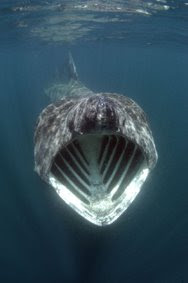
You can adopt a Basking Shark (Cetorhinus maximus), the second largest fish in the sea, which has long been a regular visitor to theBritish Isles , complete with its own place in history and legend. Or, a Great White Shark (Carcharodon carcharias), which can be found in temperate seas all over the world, for example, France to South Africa, including the Mediterranean.
The Shark Trust adoption programme supports and funds conservation projects and research into sharks in the United Kingdom and California

You can adopt a Basking Shark (Cetorhinus maximus), the second largest fish in the sea, which has long been a regular visitor to the
www.baskingsharks.org – The Basking Shark Project website
www.sharktrust.org/sd - The online Sightings Database
www.sharktrust.org/sd - The online Sightings Database
June 29, 2008
WHALING WALL

The International Whaling Commission (IWC) has been holding its annual meeting in Santiago.
The main issue has been whether pro- and anti-whaling countries can resolve their differences. They agreed to spend a year looking for a compromise deal.
BBC environment correspondent Richard Black has been sampling opinions on the peace initiative.

Jose Truda Palazzo
Alternate (deputy) Whaling Commissioner, Brazil
It could work if there were some commitment from the whaling countries; but what we are seeing is there is absolutely none. They show that they have no interest in diplomatic and civilised dialogue or compromise.
Having come to this meeting for 25 years, the hope I had on Monday is almost gone.

Jeannine Rambally
Whaling Commissioner, St Lucia
Whaling Commissioner, St Lucia
There isn't much harmony. People are not bending.
We have to respect different cultures. I shouldn't go to England and say "you shouldn't eat bangers and mash". There are some whales that shouldn't be harvested because they are endangered; but if it can be done sustainably, I don't see anything wrong with it.

Bo Fernholm
Whaling Commissioner, Sweden
Sometimes you feel the more extreme countries are happy with the situation, and that it's us in the middle who should be unhappy.
Marine resources can be used sustainably. The IWC should have a role ensuring there is sustainable use of what can be used sustainably, and that is not many species today.

Mona George-Dill
President, East Caribbean Coalition for Environmental Awareness

Calestous Juma
Harvard University; IWC special adviser
Andy Ottaway
Campaigns Director, Campaign Whale

President, East Caribbean Coalition for Environmental Awareness
If we put our minds together as human beings to make the compromise process work, it can work. But if we're each of us going to stick out for our own positions, then it won't work.
It's my opinion that some of the commissioners have a lot to lose personally (from compromise).

Calestous Juma
Harvard University; IWC special adviser
The whaling convention was created for one purpose - to allocate catches. New issues have come up, to do with conservation and other uses of marine resources, that need different treatment.
What is needed is mutual recognition of divergence of objectives; and that is not happening yet.

Andy Ottaway
Campaigns Director, Campaign Whale
A deal wouldn't address the tens of thousands of dolphins and porpoises that are being slaughtered each year in Japanese waters.
They've slaughtered about 350,000 porpoises since 1986 - that's two every hour for the 22 years of the commercial whaling ban. This extermination must be a priority for the IWC.

Miguel Marenco
Central American Council for Sustainable Fisheries Development
If this negotiation fails I believe pro-use countries will decide a new way. You cannot stop small coastal whaling; it is part of the world's culture.
Australians eat kangaroo, Koreans eat dog, Nicaraguans eat turtle. What we teach our communities is how to do it sustainably.

Paul Spong
Director, OrcaLab, Canada
Director, OrcaLab, Canada
I think it's basically a fantasy world; I just can't see the sides coming together.
But it's vital that this issue goes away somehow. Huge resources are being devoted to what is, on the bottom line, in a planetary context, a trivial issue. We have to sort out the real problem we face, which is climate change.
IWC - WHALE MEET ENDS WITH PEACE

The annual meeting of the International Whaling Commission (IWC) has ended with member governments agreeing to try and resolve their differences.- The next year will see intensive dialogue between pro- and anti-whaling countries, and could lead to a package deal next year. But there is still significant water between the camps on key issues. The meeting also decided to embark on a research programme into theimpact of climate change on whales. The only vote of the meeting saw Greenland's bid to add humpback whales to the annual hunt by its indigenous Inuit communities defeated. IWC chairman William Hogarth, the US commissioner, was cautiously optimistic that the peace talks might bear fruit.
"I was basically very happy with the meeting, although I don't think it's going to be easy, there are definitely some big issues such as the lethal take of whales and scientific research whaling," he told BBC News.
"The number of whales being killed is increasing; and I think the way we ought to be looking at this, from the point of view of countries that are anti-whaling, is how can we reduce that number?" All members of the commission, ranging from the strongest whaling nations including Japan to the most vociferous opponents such as the UK and Australia, have endorsed the idea of seeking compromise, although some were pessimistic about its prospects when talking on the meeting's fringes. The most fundamental demand of anti-whaling nations would be that Japan halts its scientific whaling programme in the Antarctic, and perhaps agrees to close the provision for scientific hunting completely. "I don't think we can give (it) up, and we have a very basic position that we have to guard," said Japan's alternate (deputy) IWC commissioner Joji Morishita. "But I keep saying that we can still talk to each other; we have differences of opinion, differences of position, but that does not mean we cannot talk to each other." For their part, Japan and the other active hunting nations - Norway and Iceland - would probably have as their most fundamental demand that the global moratorium on commercial whaling is at least partially lifted to allow hunting in coastal waters.
STUCK FAST
Environmental and animal welfare groups are divided on the merits of the peace plan. Some agree with Dr Hogarth's view that it might lead to a fall in the number of whales killed, while others say there should be no compromise, and are angry with anti-whaling governments including the US for pursuing the initiative. "It's not just the interests of the American people that are being abandoned, but also the future of the world's whales," said DJ Schubert of the Animal Welfare Institute. But Wendy Elliott of WWF's global species programme said a dialogue was worthwhile. "We cannot continue in the scenario that we have at the moment; we need to see a resolution to this impasse," she said. Conservation groups were also pleased with the decision to set up an initiative on climate change and cetaceans. Changes to sea ice in the polar regions has the potential to impact some species severely. Several groups also presented studies concluding that the argument that whales need to be hunted in order to increase the availability of fish for human consumption - which circulates among some of the pro-whaling bloc - is simply wrong. "We've shown that even in those areas where whales do eat commercial fish species, the whales are a minor factor in rises and falls of fish stocks, and the dynamics of those systems can be much better explained by looking at interactions between fish species themselves," said Ms Elliott. Officials from IWC member governments will now embark on a series of discussions leading to the next full meeting in Portugal in a year's time.
I´M A DIVER
Source: BBC NEWS
June 25, 2008
TOO GOOD TO BE TRUE !!!
Humpbacks may be safe for a year: IWC
Japan is expected to agree to suspend hunting humpback whales for at least another year, the head of the International Whaling Commission (IWC) says.IWC chair Bill Hogarth said he had convinced the Japanese not to include humpbacks in their scientific whaling program until at least 2009.
Dr Hogarth said allowing the Japanese fleet to include the species in its quota would have further split an already deeply-divided IWC.
"I think Japan ... will honour that until 2009 or get to the point when we do make bargains or don't make bargains," Dr Hogarth said on ABC Radio.
Japan had planned to include 50 humpbacks in last summer's hunt but backed down after strong condemnation from the global community.
Australian Environment Minister Peter Garrett, who has arrived in Chile for the IWC meeting, plans to present a proposal to have the commission focus on the conservation of whales through non-lethal scientific research.
"What I will be emphasising is Australia's clear views on opposing the killing of whales in the Southern Ocean in the name of science and advocating a well researched proposal to modernise the IWC by introducing conservation management plans for whales, developing collaborative research partnerships and bringing about an end to so-called scientific whaling,"Mr Garrett said the federal government would not compromise over the killing of whales for commercial or scientific purposes.
- "Australia hasn't come to the whaling commission to compromise at all," Mr Garrett said.
- "We are absolutely strongly of the view that we do not want to see the commercial exploitation of whale populations ... This commission needs to concentrate on the science of conservation, not on the science of killing whales, and that is the view we are taking to this meeting this week."
Mr Garrett said that in order to resolve these issues the IWC must be reformed into a legitimate scientific body.
- "Australia comes to this IWC with the clearest of views and that is we need to reform an organisation which has not been able to satisfactorily resolve any of these issues in the past," he said.
- "All that's happened is that we've had a sequence of arguments and acrimony and failed process.
- "If we're serious about the whaling commission being a body that resolves these issues then it needs to be based in legitimate, grounded and agreed science."
June 23, 2008
I´M A DIVER NETWORK - THE BEST U.W. PHOTO OF THE MONTH

The talented Jorge know as "DOS OCEANOS" , takes us very close to the magnificent SAN ANDRES - COLOMBIA, South America waters, into a journey where we can imagine that we are right there diving in the tropical sea, right beside to our buddie, as he takes us on an called "Adventure in SAN ANDRES" .
The Caribbean coast and islands isn’t just about white sand beaches and scuba diving. You can delve the depths of colonial and Independence history, in such cities as Cartagena and Santa Marta, tracing the steps of Spanish explorers and Simón Bolívar. Many astounding national parks and reserves, like Tayrona, Los Flamencos, Ciénaga and Sierra Nevada de Santa Marta, provide opportunities to witness sea turtles breeding and spectacular bird watching. Let your footfalls echo through the ancestral ruins of Ciudad Perdida and El Pueblito.
Aracataca, Gabriel García Márquez’ hometown, is the ultimate Macondo.
But along this coast, every village is a Macondo, with strange festivals to celebrate with the locals, from the caiman in Ciénaga to the donkey pageant in Sincelejo. Of course, don’t forget to join the big parties here, drinking whiskey with Valledupar at the Vallenato music festival and dancing traditional cumbia in Barranquilla’s Carnaval.
The visual arts are not neglected, with world-class art museums in the major cities and Cartagena’s film festival.
San Andrés is the most exotic of the Colombian Caribbean jewels, with an English-based culture and the best of (yes) beaches and scuba diving.
Jorge is a diver truly commited with preservation and conservancy for the Oceans and ecosystems.
I´M A DIVER NETWORK is very proud to have an excellent fighter and also a teacher of what Colombian citizens and friends can do to help.
That´s why "DOS OCEANOS" is the winner of this month, and our congratulations for his job, WELL DONE we all say.
I´M A DIVER
NETWORK GROUP
Here your best U. W. Photos :)
June 13, 2008
Making Waves OCEAN CONSERVANCY

For centuries people have exploited the oceans with little thought to the future. Clearly, we can't afford to neglect them any longer.
They provide much of the food we eat and the oxygen we breathe — our very existence depends upon healthy oceans.
Ocean Conservancy's four strategic priorities reflect the critical ocean conservation issues that will be the main focus of our efforts. We believe that we can make the most tangible contribution to ocean health by building on our historic accomplishments, strengths, and expertise. They provide much of the food we eat and the oxygen we breathe — our very existence depends upon healthy oceans.
We intend to focus our efforts, resources, and attention on the following four critical objective.
Eighty-five percent of our funding comes from individuals. Support Ocean Conservancy’s programs and join the thousands of people who share your concern for our ocean by donating today.
Ocean Conservancy promotes healthy and diverse ocean ecosystems and opposes practices that threaten ocean life and human life. Through research, education, and science-based advocacy, Ocean Conservancy informs, inspires, and empowers people to speak and act on behalf of the oceans. In all its work, Ocean Conservancy strives to be the world's foremost advocate for the oceans.
Activities
International Coastal Cleanup
Volunteers from around the globe and 55 U.S. states and territories participate each year, clearing tons of trash from coastlines, rivers and lakes.
Good Mate
Our Good Mate program helps boaters and marinas develop environmentally sound practices to reduce pollution, keep fish thriving and make boating pleasant and safe.
Reducing Marine Wildlife Entanglement in Tampa Bay
Ocean Conservancy is beginning a long-term project at the South Sunshine Skyway Fishing Pier in Tampa Bay to help dolphins, manatees, sea turtles and sea birds avoid entanglement in monofilament fishing line. Get involved!
SEE Turtles
SEE Turtles is an Ocean Conservancy conservation tourism campaign that links people with sea turtle sites in ways that directly support efforts to protect sea turtles, while increasing resources in communities to help residents thrive and value sea turtles in their environment.
If you want to know more about our Oceans and marine species, recent news and how to support and adopt mammals, this is the perfect link.
http://www.oceanconservancy.org

I´M A DIVER
imadivernetwork@gmail.com
SHARK FINNING IN GALAPAGOS ISLAND, SHAME OR STUPIDITY ???

Either it be incidentally, arbitrarily, legal or illegally, the number continues being the same: one hundred million sharks killed every year in the planet. And it also happens in Galápagos!
I have not read about it, no one told me about it; I saw it with my own eyes, I personally gathered the net to take the photo for this article. It was difficult for me to raise it because on it, in it, and through it, hundreds of inert creatures were hanging, trapped. I was following the instructions of Franklin Guaranda, who was trying to obtain the necessary evidence to report to the Galápagos National Park. “Raise the net more”, “Hold it high and don’t move it”, “Twist it a little towards the light”, “Hurry it seems that the fishermen are coming”.
Disciplined as I am, held my breath and my tears. Never in my life had I seen a shark caught in a fishing net. A small black fin shark, like a little rubber fish, constituted a great part of the weight that I held under my arms.
With the Zodiac we traveled the approximately three hundred meters of net, from one end to the other, both tied to the beach, taking photographs and video. We saw at least three rays caught, agonizing, four inert sharks and, by of course dozens of Mullets also known in Ecuador as Lisas (Mugil sp.) which are the primary target of this type of fishing.
At six thirty in the morning, our passengers were at the top of Bartolomé Island, one of the most visited sites of the islands. From its height of one hundred and fifteen meters, they contemplate the sun illuminating San Salvador to the west, Santa Cruz in the distance, the north beach of Bartolomé with its golden half moon form and to the south… in the south beach… a circle of death, in broad day light.
The guides call to the boat. Giancarlo Toti, Graciela Cevallos, Walter Perez insist on the radio. Even as they are seeing it, they can’t believe it. The captain, Juan Robalino, authorizes a Zodiac, and with camera in hand, our only weapon and instrument of work, we rushed to the reported place. I have lived something similar in two previous occasions. I knew I was at risk of being insulted, as it has happened before, that we would have to be fast in case the fishermen became aggressive, and that we had to protect the camera. But everything came to pass very “civilized”, if the term fits.
Disciplined as I am, held my breath and my tears. Never in my life had I seen a shark caught in a fishing net. A small black fin shark, like a little rubber fish, constituted a great part of the weight that I held under my arms.
With the Zodiac we traveled the approximately three hundred meters of net, from one end to the other, both tied to the beach, taking photographs and video. We saw at least three rays caught, agonizing, four inert sharks and, by of course dozens of Mullets also known in Ecuador as Lisas (Mugil sp.) which are the primary target of this type of fishing.
At six thirty in the morning, our passengers were at the top of Bartolomé Island, one of the most visited sites of the islands. From its height of one hundred and fifteen meters, they contemplate the sun illuminating San Salvador to the west, Santa Cruz in the distance, the north beach of Bartolomé with its golden half moon form and to the south… in the south beach… a circle of death, in broad day light.
The guides call to the boat. Giancarlo Toti, Graciela Cevallos, Walter Perez insist on the radio. Even as they are seeing it, they can’t believe it. The captain, Juan Robalino, authorizes a Zodiac, and with camera in hand, our only weapon and instrument of work, we rushed to the reported place. I have lived something similar in two previous occasions. I knew I was at risk of being insulted, as it has happened before, that we would have to be fast in case the fishermen became aggressive, and that we had to protect the camera. But everything came to pass very “civilized”, if the term fits.
Ashamed?
- When the fishermen saw us arrive, they got into their boat and they went to the beach, to gather the net. They watched us, we watched them, we were very close to them, always with our camera in hand, but neither they nor we said a word. I want to think that with their silence they let us know that yes, they were ashamed, if not by the slaughter, then by their stupidity of having done this at this place.
- it is not allowed to fish in a tourist area, and
- No one is allowed to disembark on the beach, and the net was secured in each one its ends to dunes where marine turtles nest, one of the men ran stepping on who knows how many nests while he untied the net. Within the circle, in the water, there were turtles and at least five sea lions that were trapped and could not go anywhere, in addition to pelicans and frigate birds that were waiting to participate of the easy feast.
From the stern of their boat, of not more than ten meters in length, a full net full of Mullet hung under the water. We did not want to board the empty boat since we were less than them, so we could not see if they had caught more small sharks, which according to the detraction of Decree 2130, if caught “incidentally” are allowed to be sold on the mainland.
We cannot deny that in fact they were using a gill net for fishing Mullet. But there are hundreds of areas opened to legally fish mullet. So:
- Why fish in a tourist area which is known for its abundance of small shark, which in fact is the main attraction for the tourists here?
- Were they just there for the Mullet?
- Or were they hoping to “incidentally” catch some other small thing?
That is outside our comprehension. We took photos, video and by all means, we called the Galapagos National Park immediately.
In less than two hours, a boat from the Park arrived at Bartolomé. The fishermen had gotten rid of all the evidence. But we counted on photos, video and our report was signed and ready. The fishing boat was taken to port with the personnel of the Marine Reserve Patrol of the Galápagos National Park and a member of Navy. There the legal procedures will be followed to impose the corresponding sanctions.
The South beach, on which our passengers walked to later that morning, was full of dead Mullet, and pelicans and frigate birds that were finally participating in their much awaited feast. One of the sharks “incidentally” killed was also beached. One of the one hundred million sharks that are killed every year in the world.
Either it be incidentally, arbitrarily, legal or illegally, the number continues being the same:
one hundred millions of SHARKS killed every year in the planet.
And it also happens in Galápagos!
By Paula Tagle
nalutagle@yahoo.com
THE SHADOW OF MASS TOURISM OVER GALAPAGOS ISLANDS

GALAPAGOS ISLANDS
ECUADOR - SOUTH AMERICA
ECUADOR - SOUTH AMERICA
The principal economic activity of Galapagos is tourism, which started in the 1970s when the first island dwellers used their own fishing boats to take round visitors. Since then the number of visitors has increased and during 2005, the Galapagos National Park reported that 122,000 visitors had been to the archipelago. However, this sustainable form of tourism may be changing. Discovery World Cruises will sail into San Cristobal in April 2006 with a 500 passenger ship. Ecuadorian environmentalist, Deborah Chiriboga, said: "The future of the islands is uncertain. We are allowing Galapagos to lose its natural value. The tourist sector has shown that it is not interested in conservation. They are mainly responsible for the uncontrolled immigration into the islands." Guide, Witman Cox, thinks that the Galapagos National Park should ensure that tourism includes local participation. In other words, that tourists should not just visit the uninhabited islands but should stay in the Galapagos towns to consume local services.
The Minister of the Environment, Ana Albán, confirmed that her vision of Galapagos tourism is to attract affluent visitors who are interested in the wildlife. "The first step is to talk to the islanders to see what type of activities will take place. For the first time we are working with the Ministry of Tourism to design a long term plan with international support."
Pedro Zapata - Mayor of San Cristobal

The Special Law for Galapagos establishes that tourism should be participative and that the benefits should be distributed across the board. The authorities are not completely responsible for the management of tourism but if there is a lack of attention to this, the municipally will take control. One of the examples is sport fishing which, although it is allowed, there are no regulations. We are not going to wait 6 years more when there is already a growing demand for this type of activity that has little impact and benefits the islanders.
Leopoldo Bucheli Mora - Mayor of Santa Cruz

In future tourism should not be mass tourism but selective. I have had various meetings with the members of parliament for Galapagos so that Congress can decide as to whether to increase the tax paid by the tourists when they enter the islands. At the moment they pay $100. We need to have more tourists in Galapagos but the model of tourism should include local participation. The local people should receive, directly or indirectly, the resources left by the visitors.
Pablo Gordillo - Mayor of Isabela
We have the advantage that we are only starting with tourism so we are not repeating the errors made on other islands where the benefits did not remain in the islands. For this reason we have created regulations to control tourism and that guarantee that the islanders of Isabela will benefit. There is a limit on hotels so that they cannot be more than 450 square metres and limits on foreign investment of 50% (the remaining 50% to be from a local partner). We also ask that tour operators be accredited by the Municipality of Isabela.
There are various funds supporting projects researching and protecting these species and a donation towards the GCT Shark Campaign 2008 will ensure that your money is used for priority projects, identified and agreed by the Charles Darwin Foundation and Galapagos Conservation Trust.
OBJECTIVES:
The Galapagos Islands
Tortoise bulletThe Galapagos Conservation Trust (GCT) works to contribute to the successful management of the Galapagos ecosystem.
Tortoise bulletThe GCT also raises awareness of, and funds for, the conservation needs of Galapagos.
Tortoise bulletThe GCT is the primary source of information and comment in the UK on conservation in the Galapagos Islands.
Tortoise bulletThe GCT also raises awareness of, and funds for, the conservation needs of Galapagos.
Tortoise bulletThe GCT is the primary source of information and comment in the UK on conservation in the Galapagos Islands.
To know more about Galapagos Islands

http://www.gct.org
I´M A DIVER GROUP

DIVERS RAISE YOUR VOICES IN EVERY COUNTRY IN THE NAME OF OUR FLAG, TOWARDS SHARKS PRESERVATION.

Here a real cruelty called tournament:
Montauk Shark Tournament

Only days after congress passed the Shark Conservation Act of 2008, the slaughter of sharks is happening right here in our own backyard.
This weekend the Star Island Yacht Club Shark Tournament will take place in Montauk, NY.
The 2008 Annual Shark Tournament is being held June 12–14. This year's website boasts a prize pool of more that $1,000,000 the largest yet, which means that more sharks than ever are going to be killed. The greed and ignorance of the few will affect all of us.
Why must these types of actions always lead to the decimation of species before we stop the madness?
This weekend the Star Island Yacht Club Shark Tournament will take place in Montauk, NY.
The 2008 Annual Shark Tournament is being held June 12–14. This year's website boasts a prize pool of more that $1,000,000 the largest yet, which means that more sharks than ever are going to be killed. The greed and ignorance of the few will affect all of us.
Why must these types of actions always lead to the decimation of species before we stop the madness?
PLEASE HELP US AND HUNDREDS OF OTHERS IN PROTEST OF THE STAR ISLAND YACHT CLUB SHARK TOURNAMENT THIS WEEKEND.
Please bring your cameras and join Wendy Heller from DivePhotoGuide.com this Saturday and help cover this horrible event so that it can be broadcast to the world in efforts to create more awareness and help save our sharks. We will be working with major media to prevent this event from continuing next year.
You can also join the Humane Society rally to show your support Saturday June 14th from 4-5pm pm at the intersection of West Lake Drive and Star Island Drive, Montauk, NY. For more information on the rally, please contact Kathryn at kkullberg@humanesociety.org.
For details on Wendy's coverage location at the Shark Tournament pls. email Wendy or contact us at


 718-748-0324
 .
.
For details on Wendy's coverage location at the Shark Tournament pls. email Wendy or contact us at
718-748-0324.We look forward to your support - this is more important for the ocean and for our futures than most people will ever know. We are causing irrepairable harm that will be felt for generations to come.
More info:
More info:
- Humane Society on Shark Tournaments
- Star Island Yacht Club Shark Tournament - Associated Press
- Declaration, Manifesto for Immediate Worldwide Shark Conservation Actions
Dear members, buddies, don´t turn your back on this, I´m sure all of you know that Sharks are so important in the marine ecosystem, I don´t want to imagine our Oceans without them. Tell the world, friends, Media press, everyone so we can give our support.
LET´S SAY NO, STOP KILLING AND FILING POCKETS WITH SHARK FINNING COVERED LIKE A ROMAN AGE TOURNAMENT.
Lizbeth Maria Aguirre
I´M A DIVER
Creator
http://www.facebook.com/group.php?gid=11692617157
Subscribe to:
Posts (Atom)
ABOUT US...

SHARKWATER THE FILM
 For filmmaker
Rob Stewart, exploring sharks began as an underwater adventure. What it turned into was a beautiful and dangerous life journey into the balance of life on earth.
Driven by passion fed from a lifelong fascination with sharks, Stewart debunks historical stereotypes and media depictions of sharks as bloodthirsty, man-eating monsters and reveals the reality of sharks as pillars in the evolution of the seas.
Filmed in visually stunning, high definition video, Sharkwater takes you into the most shark rich waters of the world, exposing the exploitation and corruption surrounding the world's shark populations in the marine reserves of Cocos Island, Costa Rica and the Galapagos Islands, Ecuador.
In an effort to protect sharks, Stewart teams up with renegade conservationist Paul Watson of the Sea Shepherd Conservation Society. Their unbelievable adventure together starts with a battle between the Sea Shepherd and shark poachers in Guatemala, resulting in pirate boat rammings, gunboat chases, mafia espionage, corrupt court systems and attempted murder charges, forcing them to flee for their lives.
Through it all, Stewart discovers these magnificent creatures have gone from predator to prey, and how despite surviving the earth's history of mass extinctions, they could easily be wiped out within a few years due to human greed.
Stewart's remarkable journey of courage and determination changes from a mission to save the world's sharks, into a fight for his life, and that of humankind.
For filmmaker
Rob Stewart, exploring sharks began as an underwater adventure. What it turned into was a beautiful and dangerous life journey into the balance of life on earth.
Driven by passion fed from a lifelong fascination with sharks, Stewart debunks historical stereotypes and media depictions of sharks as bloodthirsty, man-eating monsters and reveals the reality of sharks as pillars in the evolution of the seas.
Filmed in visually stunning, high definition video, Sharkwater takes you into the most shark rich waters of the world, exposing the exploitation and corruption surrounding the world's shark populations in the marine reserves of Cocos Island, Costa Rica and the Galapagos Islands, Ecuador.
In an effort to protect sharks, Stewart teams up with renegade conservationist Paul Watson of the Sea Shepherd Conservation Society. Their unbelievable adventure together starts with a battle between the Sea Shepherd and shark poachers in Guatemala, resulting in pirate boat rammings, gunboat chases, mafia espionage, corrupt court systems and attempted murder charges, forcing them to flee for their lives.
Through it all, Stewart discovers these magnificent creatures have gone from predator to prey, and how despite surviving the earth's history of mass extinctions, they could easily be wiped out within a few years due to human greed.
Stewart's remarkable journey of courage and determination changes from a mission to save the world's sharks, into a fight for his life, and that of humankind.

